
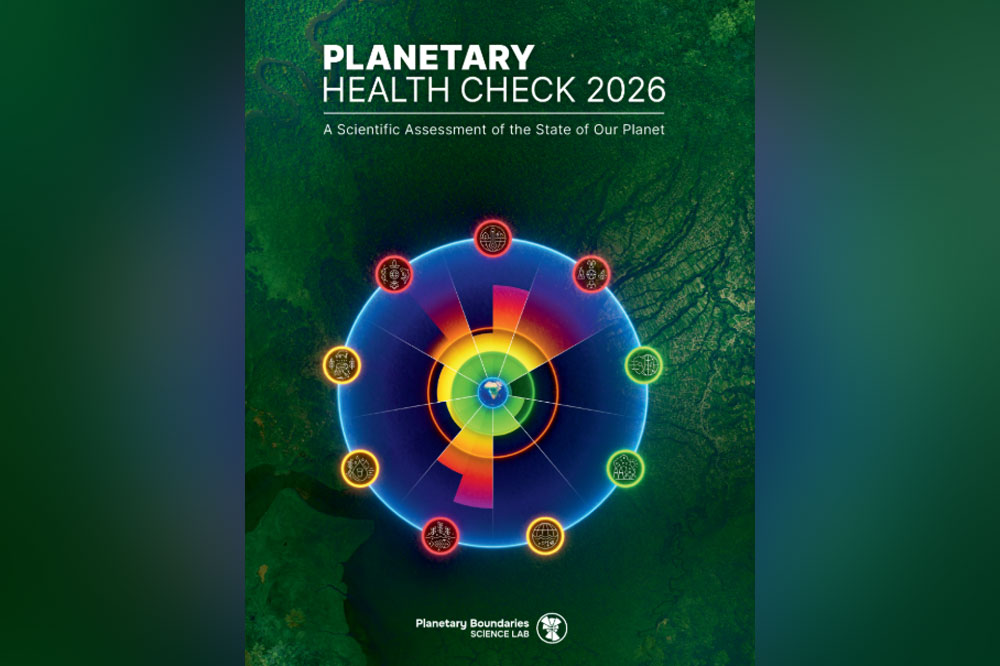
The newly published Planetary Health Check 2026 brings into focus the state of our planet’s life-support systems – including the oceans. Among its key findings, the report highlights that ocean acidification is now a present-day global challenge, and it features members of the SCOPE team as co-authors (Daniel Ford and Jamie Shutler) and incorporates SCOPE data as a crucial source of evidence.
SCOPE’s Contribution
Within the Planetary Health Check 2026 report, the UExP-FNN-U (v2026-pre1) full surface ocean carbonate system dataset, developed by SCOPE in collaboration with the Ocean Carbon for Climate (OC4C) project, is used as the main dataset to assess the ocean acidification planetary boundary.
This dataset integrates observations from ships, autonomous platforms, satellites and reanalyses to produce a high-resolution, global view of the surface ocean carbonate system. By providing reliable, open-access data, SCOPE and OC4C enable global assessments like Planetary Health Check to monitor ocean chemistry with confidence.
Alongside this Daniel Ford the assessment by incorporating an ensemble of surface ocean carbonate system datasets to enable a more robust assessment of the boundary. This analysis also investigated the differences between the estimates and found that the geographical coverage of the products was a key driver (this analysis is included within the supplementary material).
What the Data Shows
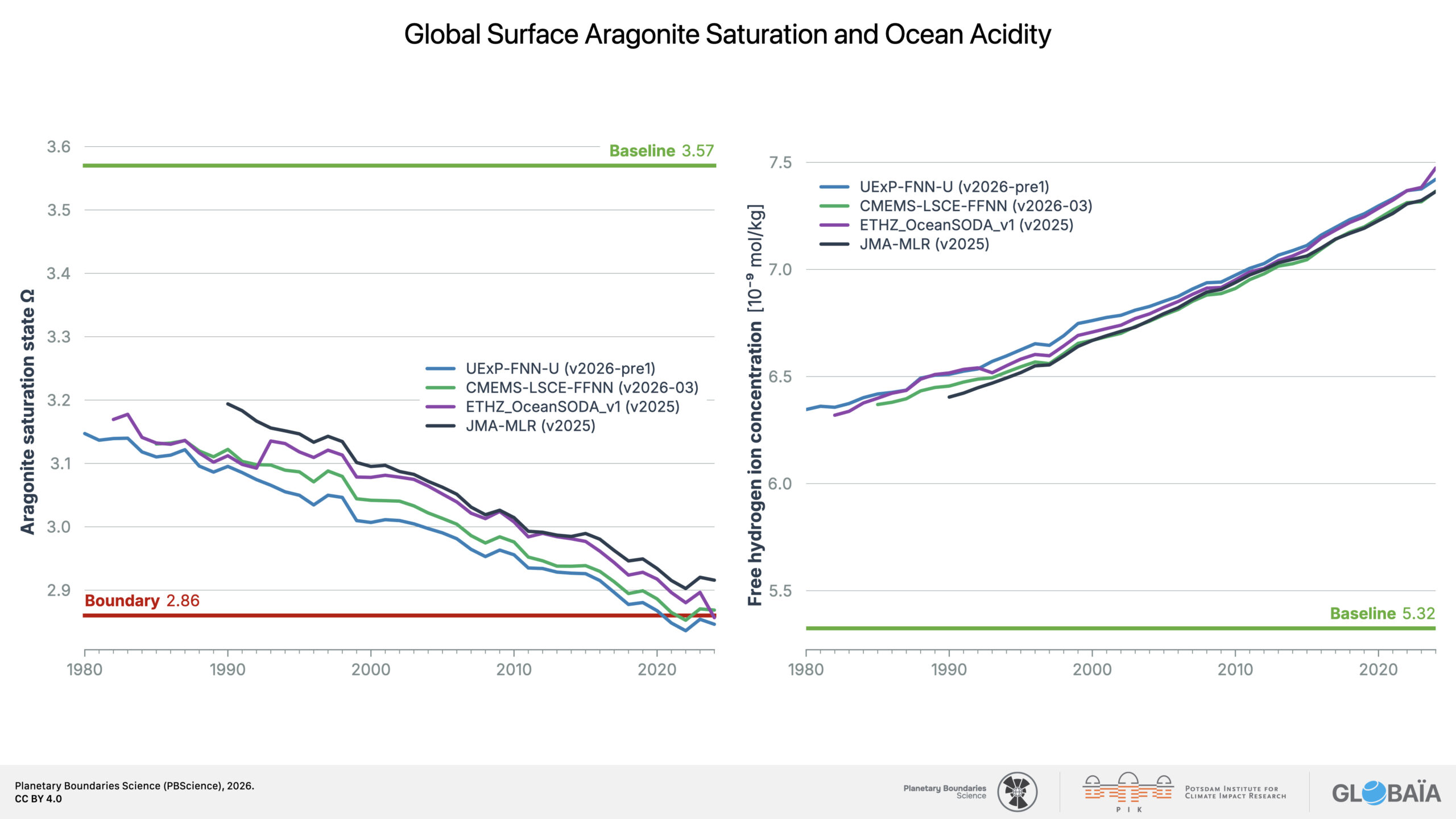
A key metric of ocean health is the aragonite saturation state (Ω) at the sea surface. The report shows that Ω has dropped to 2.85±0.01 (see figure above), just below the revised planetary boundary of 2.86. This indicates that ocean acidification has already crossed a critical threshold, highlighting the urgent need for mitigation and adaptation strategies.
Read the full report (which includes the figure above and related attribution) : Planetary Health Check 2026 PDF
Looking Ahead
SCOPE has generated various datasets of the pools and fluxes of carbon in the ocean, including uncertainty estimates, that are now being analysed in scientific and impact case studies as the project progresses. With its datasets now featured in global assessments, SCOPE is helping ensure that policymakers, scientists, and the public have the information they need to safeguard the ocean – and the communities that depend on it.