A story of Ocean Carbon
Follow the story of Ocean Carbon with Edukeo – Ocean Carbon. Which showcases the work of SCOPE and sister project OC4C.

Follow the story of Ocean Carbon with Edukeo – Ocean Carbon. Which showcases the work of SCOPE and sister project OC4C.

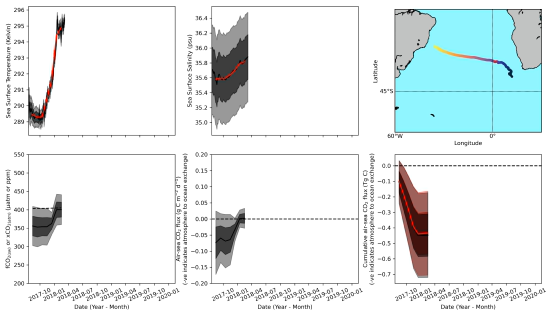
A major new study has revealed that longlived swirling ocean features, known as mesoscale eddies, play a role in modifying the absorption of atmospheric carbon dioxide (CO₂). They can last for months or even years and carry heat, nutrients, and carbon across vast distances. Although their physical impacts have been studied for decades, until now scientists lacked a global dataset of how longlived eddies influence air–sea CO₂ exchange.

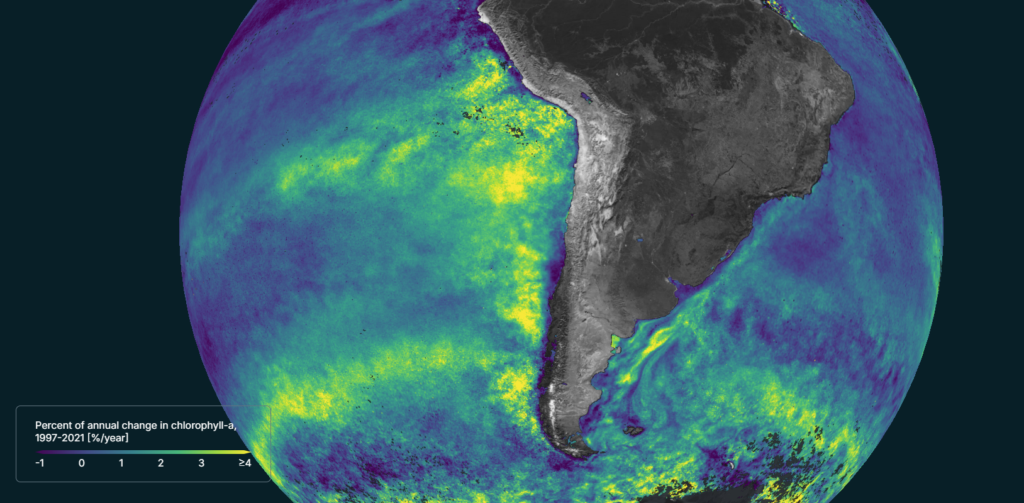
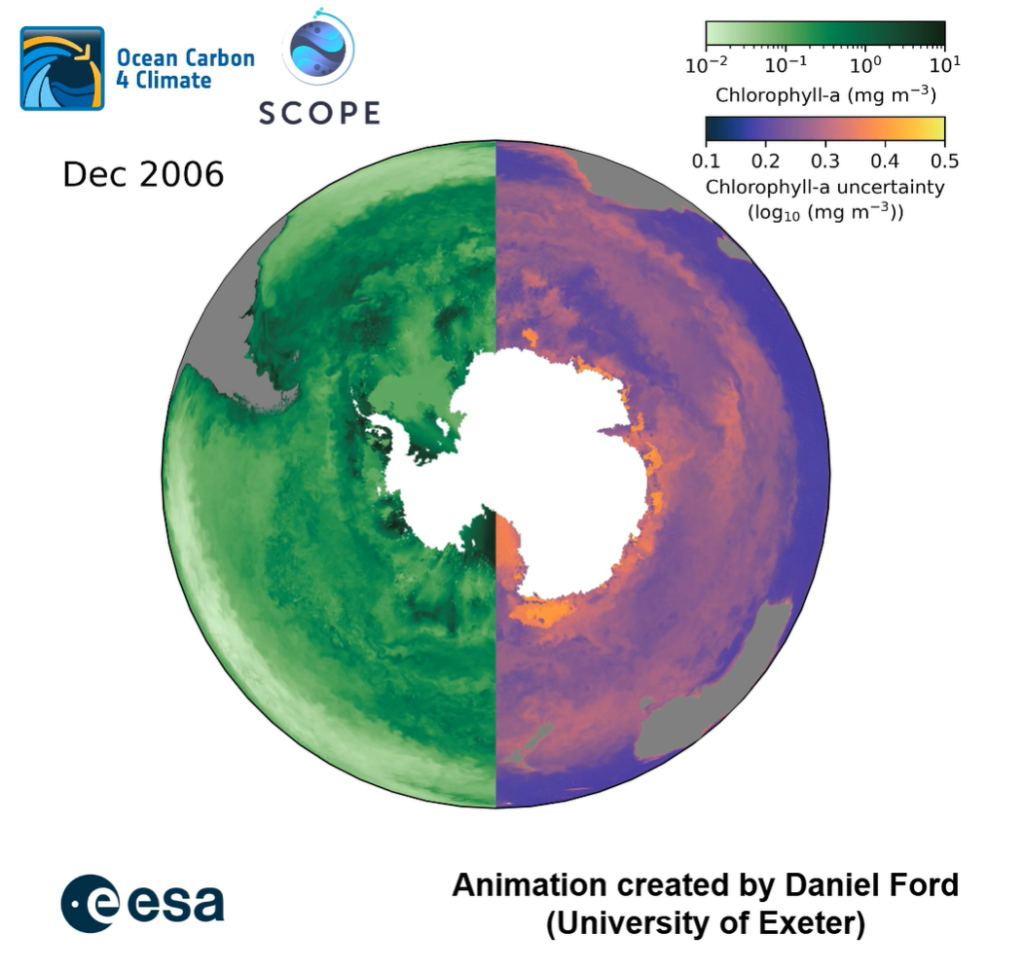
A new peer-reviewed study led by Daniel Ford has been published in Earth System Science Data, presenting a spatially and temporally complete global surface chlorophyll-a (chl-a) data record spanning 1997–2024.

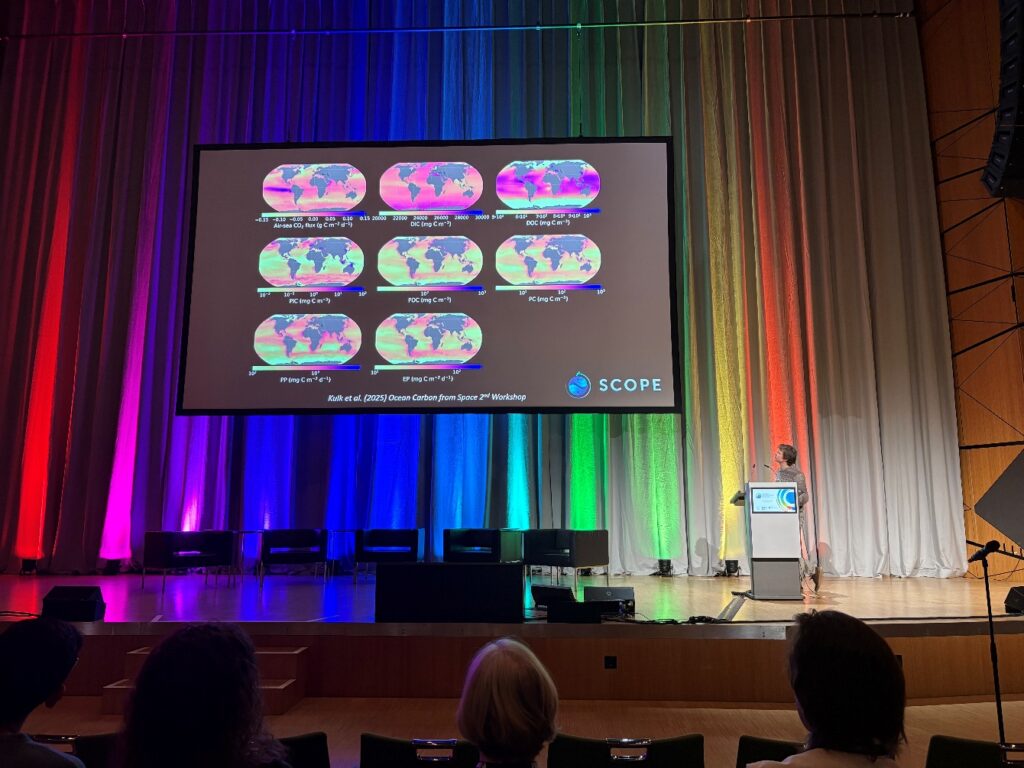
Over the last two weeks, the SCOPE team co-delivered the Second Ocean Carbon From Space Workshop with the European Space Agency (ESA), NASA, JAXA, EUMETSAT.

We’re pleased to share that the SCOPE project has been acknowledged in the upcoming Global Carbon Budget 2025, recognising our contribution to advancing global understanding of the ocean carbon cycle.

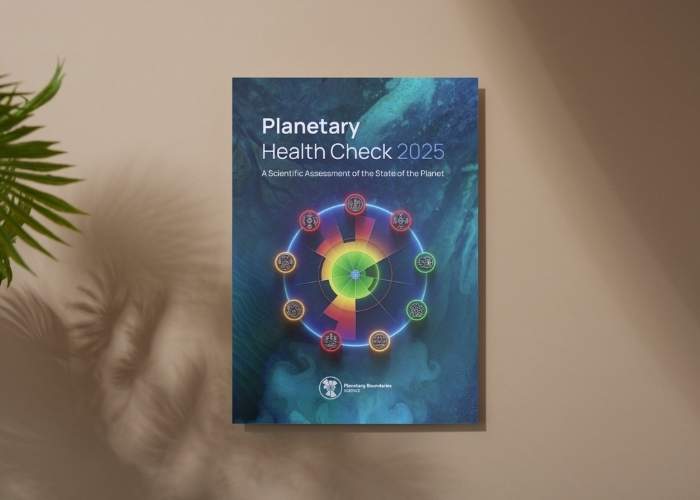
The newly published Planetary Health Check 2025 brings into focus the state of our planet’s life-support systems

Coordinated by the ESA-funded SCOPE project (Satellite-based observations of Carbon in the Ocean: Pools, Fluxes and Exchanges). Dates • Online: 24–26 November 2025 • In-person:

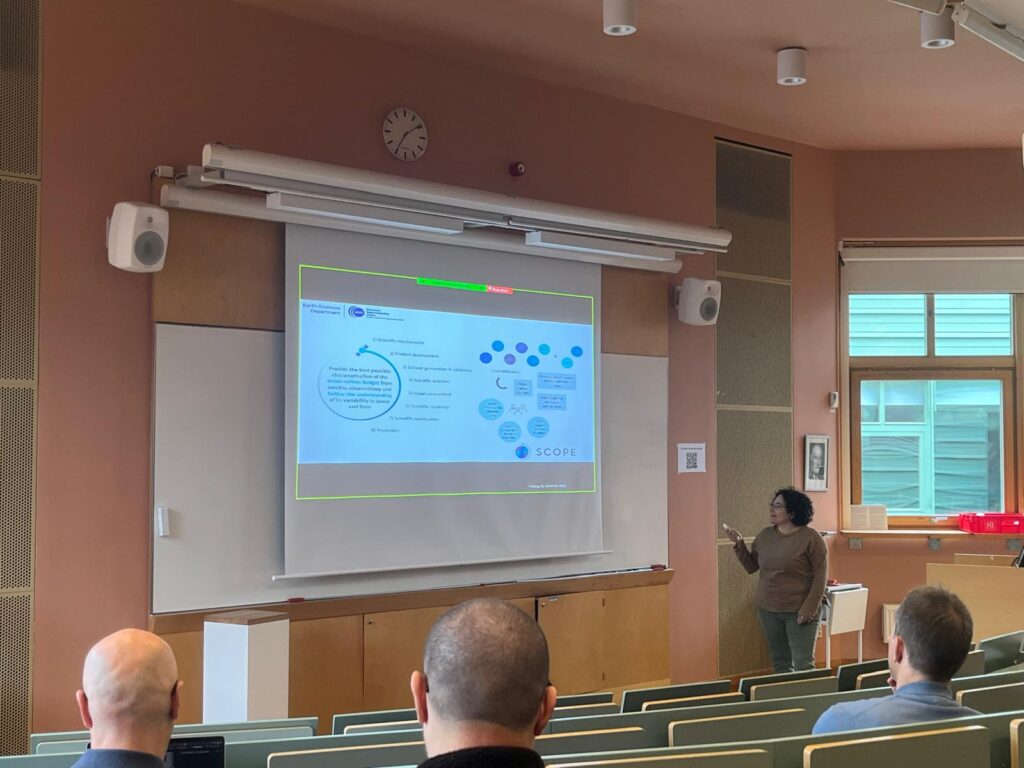
Valentina Sicardi presented SCOPE at the EC-Earth General Assembly at Stockholm University in March. View Event

This week, the SCOPE project proudly featured at the AI4NetZero conference in Exeter, with Plymouth Marine Laboratory researcher Dr Mayra Rodriguez presenting. The conference gathered
Ocean Sciences Meeting – Glasgow, Scotland 22-27 February 2026
Ocean Optics XXVII – Ghent, Belgium 13-18 September 2026